
Paxsilica , By Michael Sharpe, 18 June 2026
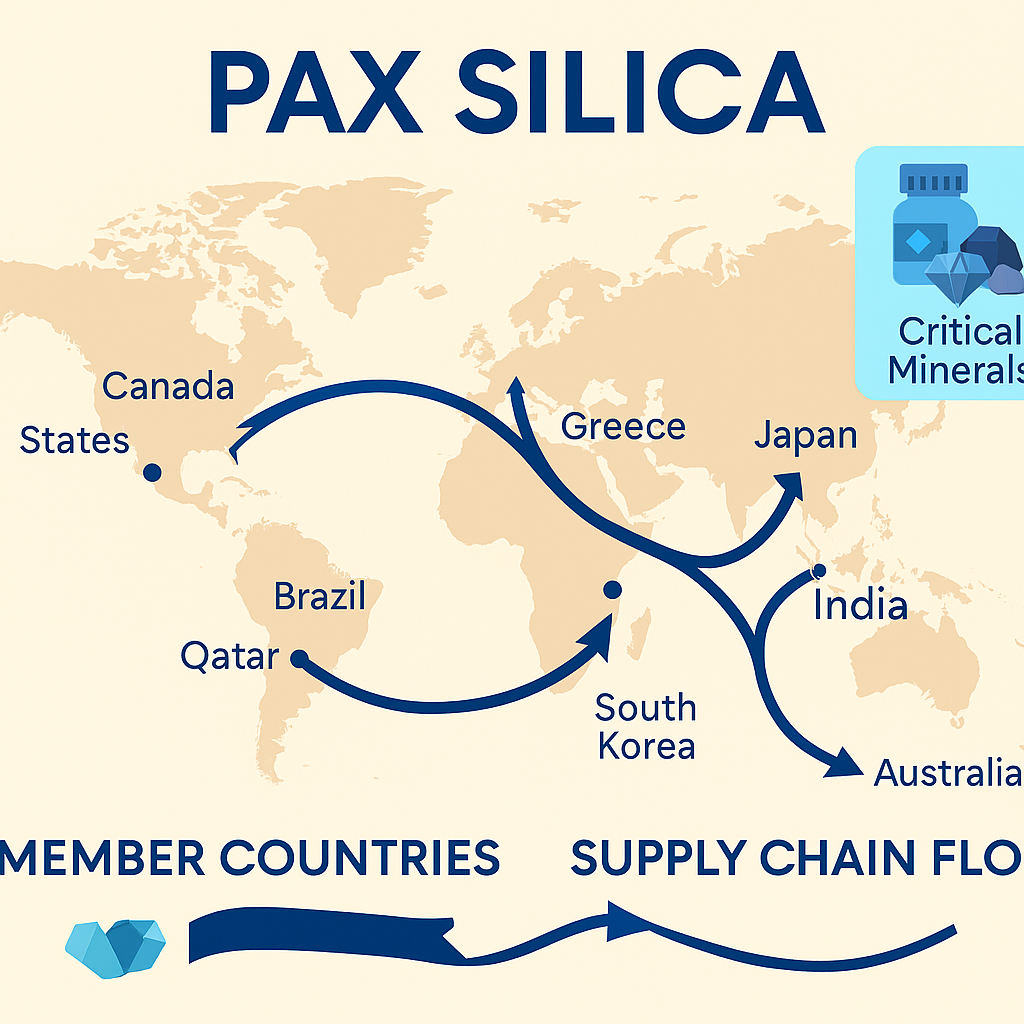
Pax Silica is a U.S.-led strategic initiative to build a secure, prosperous, and innovation driven silicon supply chain.
Pax Silica Forum News
Pax Silica: The Economic Alliance That Could Reshape the Indo-Pac
By Michael Sharpe
For decades, globalisation was driven by efficiency.
Companies built supply chains wherever costs were lowest, resources were abundant and markets were accessible. The result was an interconnected global economy that delivered growth, innovation and prosperity.
Today, that model is being redefined.
Around the world, governments are increasingly viewing supply chains, advanced technologies, critical minerals, artificial intelligence and energy systems through the lens of economic security. The question is no longer simply where products can be manufactured most cheaply, but where they can be produced reliably, securely and in partnership with trusted nations.
This is where Pax Silica enters the conversation.
What began as an initiative focused on strengthening semiconductor and technology supply chains is rapidly evolving into a broader framework for international economic cooperation. It is bringing together countries, investors, technology leaders and industrial partners around a common objective: building resilient, future-focused economies capable of supporting the technologies that will define the twenty-first century.
Recent developments highlight the growing international nature of the initiative.
India has expanded cooperation under the Pax Silica framework, recognising the strategic importance of artificial intelligence, advanced technologies and critical minerals. The Philippines has announced plans for a major Economic Security Zone linked to the initiative, positioning itself as a future destination for advanced manufacturing and technology investment.
At the same time, nations across the Middle East, Asia and beyond are increasingly engaging in discussions about how they can contribute to and benefit from emerging technology ecosystems that are less dependent on fragile supply chains and more focused on long-term resilience.
This reflects a broader global trend.
The next generation of economic growth will not be driven by a single country or region. It will be built through networks of nations that combine resources, capital, technology, manufacturing capability and talent.
Critical minerals may come from Australia, Africa or South America.
Advanced manufacturing may occur in the United States, Europe, Southeast Asia or the Middle East.
Artificial intelligence infrastructure may be developed across multiple continents.
The future economy will be interconnected, but in a different way than before. It will be built on trusted partnerships, shared investment and strategic collaboration.
For Australia, this presents a significant opportunity.
Australia is uniquely positioned at the intersection of critical minerals, energy resources, advanced manufacturing and emerging technologies. However, the greatest opportunity may not lie solely in what Australia produces, but in the partnerships it helps create.
As nations seek to diversify supply chains and strengthen industrial resilience, Australia has the potential to become a key connector between regions, industries and investors.
The importance of initiatives such as Pax Silica extends beyond economics.
They represent a new model of international engagement—one where countries work together not only through trade agreements and diplomatic channels, but through shared industrial strategies, technology collaboration and long-term investment partnerships.
In an era of increasing geopolitical uncertainty, these relationships may prove to be among the most important assets a nation can possess.
The global economy is entering a new chapter.
One defined not just by competition, but by collaboration.
Not just by markets, but by partnerships.
And not just by what nations can build alone, but by what they can achieve together.
Pax Silica may still be in its early stages, but its direction is becoming increasingly clear.
It is helping shape a future where international engagement is measured not simply by trade flows, but by the strength of the industrial, technological and economic ecosystems that nations create together.
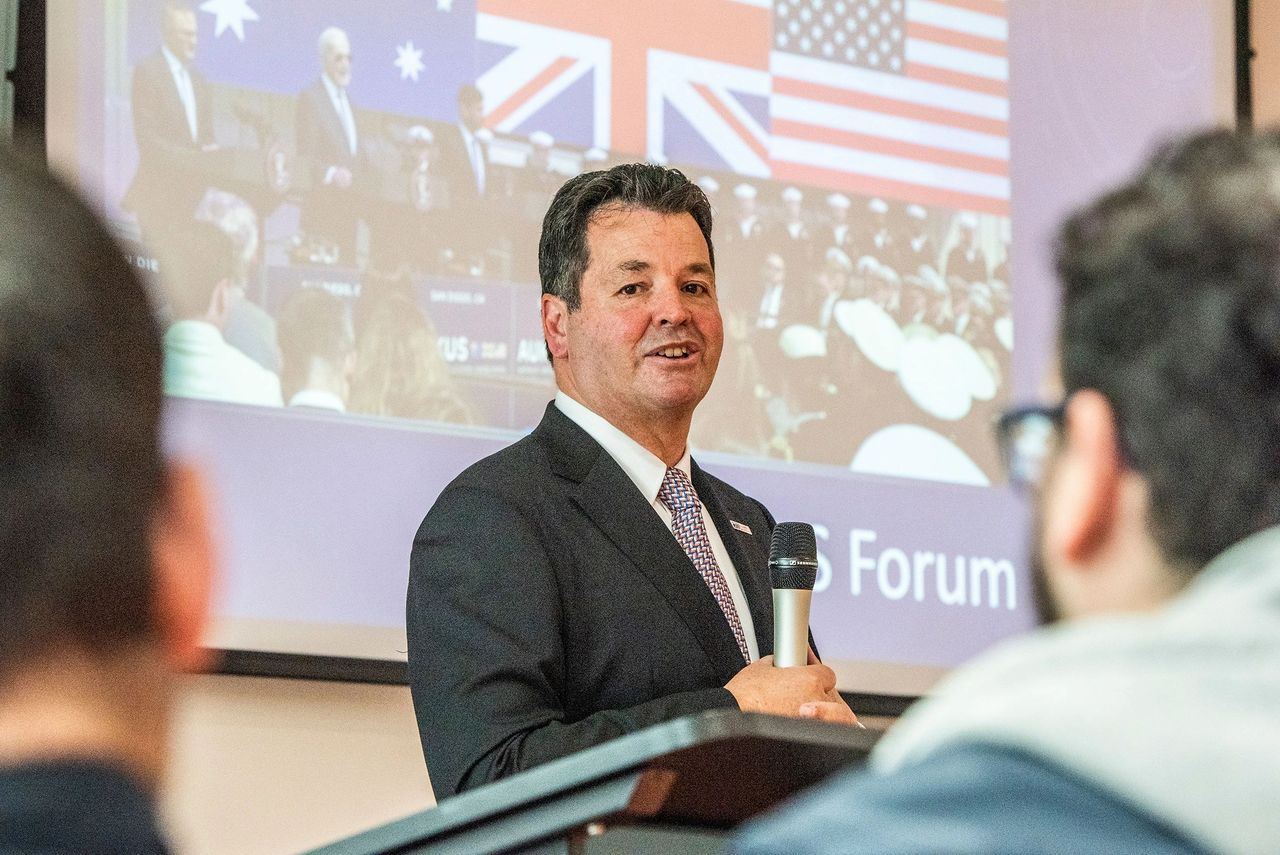
Michael Sharpe is Executive Director of the Pax Silica Forum and CEO of the AUKUS Forum. Drawing on extensive experience across manufacturing, industry development and international collaboration, he works with businesses, researchers and governments to accelerate industrial innovation, advanced materials development and sovereign manufacturing capability across allied nations.
Share this post:
Leadership at Pax Silica Forum
CEO - Michael Sharpe
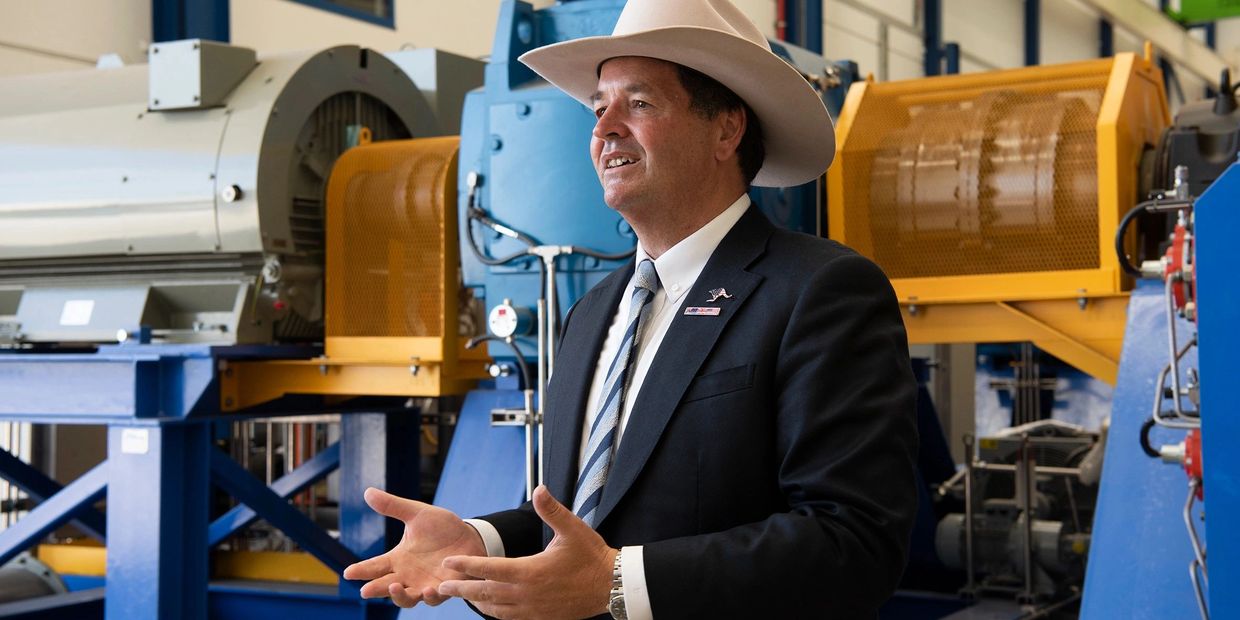
Michael Sharpe operates at the intersection of industry, government, and allied supply chains around the world. His work spans engineering, infrastructure, agriculture, energy, environmental sustainability, the space sector, academia, and the nuclear industry—focused on turning capability into coordinated industrial outcomes across borders.
He is extremely well connected with international manufacturing, industrial and political leaders, as well as the world's top universities, including activities in the nuclear and AUKUS spheres.
As Chief Executive Officer, Michael leads an organisation that operates across industry, government, and academia in Australia, the United Kingdom, and the United States. He has a personal contact base of over 100,000 people across Australian industry, including more than 48,000 members of the AUKUS Forum and 41,000 LinkedIn connections, with many more built over his time on projects for infrastructure, advanced manufacturing, and research activities. His extensive range of industry networks has been assembled over the last three decades.
Widely regarded as one of the most connected people in Australian industry, with a strong focus on business transactions, Michael is focused on transformation and leadership – helping countless businesses access new export opportunities and enter adjacent markets, such as traditional engineering firms stepping into the space and defence industries.
This gives him an unrivaled ability to connect with key decision makers, facilitate contacts between Australian and overseas manufacturers, establish joint ventures, and create supply chains. His network is actively leveraged by global companies, including major U.S. corporations seeking trusted Australian industry partners.
Michael has vast experience in politics, industry, and manufacturing, having served as the National Director for Industry at the Australian Government’s Advanced Manufacturing Growth Centre and as Chairman of the HunterNet Co-operative, a very successful industry cluster based in the Newcastle area of New South Wales.
He is a Fellow of the Institute of Managers and Leaders; a Fellow of The Royal Society for the Arts, Manufactures & Commerce; and has completed courses in Leadership at the Harvard Business School.
