ΕΠΙΣΤΗΜΟΝΙΚΑ ΑΡΘΡΑ
The Durand Line Dispute: British Colonial Boundaries, Contested Legitimacy, And The Persistent Afghanistan–Pakistan Conflict – Analysisf
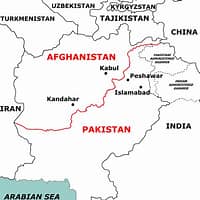
Eurasia Review By Zarif Aminyar
The Durand Line Agreement remains one of the most enduring and controversial boundary issues in South Asian geopolitics.
Established in 1893 between Mortimer Durand and Abdur Rahman Khan, the line was originally intended to define spheres of influence between British India and Afghanistan during a period of intense imperial rivalry known as the “Great Game.” Over time, however, it evolved into the de facto border between Afghanistan and Pakistan, despite Afghanistan’s consistent refusal to formally recognize it since 1947.
Unlike many international boundaries, the Durand Line is not simply a geographic division but a product of British colonial strategy, shaped by geopolitical considerations rather than mutual agreement between equal states. As a result, it continues to generate political tension and legal debate. While international law often prioritizes the stability of borders through doctrines such as state succession and territorial continuity, the Durand Line presents a unique case where historical context, legal interpretation, and political reality remain deeply contested. In this article I explore the Durand Line through a critical Afghan perspective, examining the historical circumstances of its creation and the legal arguments surrounding its status.
1. Coercion and Lack of Free Consent
The legitimacy of the Durand Line Agreement is frequently challenged by Afghans on the grounds that it was concluded under conditions of coercion and unequal power relations. Although the agreement appears formally consensual, the broader geopolitical context suggests that Afghanistan’s ability to negotiate freely was significantly constrained. Following the Second Anglo-Afghan War (1878–1880), Afghanistan emerged as a politically fragile state, heavily dependent on British financial subsidies and military support. The Amir, Abdur Rahman Khan, relied on British backing to consolidate his rule and maintain internal stability (Gregorian, 1969). This dependency created what scholars describe as structural coercion, where the weaker party is compelled to accept terms due to external pressures rather than direct force. It is important to state that under modern international law, treaties concluded under coercion are considered invalid, as reflected in the Vienna Convention on the Law of Treaties (1969).
Although the convention postdates the agreement, it reflects customary legal principles emphasizing genuine consent. It can be argued that British strategic dominance in the region, during the “Great Game,” left Afghanistan with limited options, effectively forcing acceptance of British demands (Poya, 2017). While critics contend that unequal power relations do not automatically invalidate treaties. However, it is important to emphasize that the degree of dependency in this case goes beyond ordinary asymmetry. Therefore, the risk of political destabilization or renewed conflict meant that refusal was not a realistic option.
2. Absence of Full Sovereignty
Another key argument against the legitimacy of the Durand Line is that Afghanistan lacked full sovereignty at the time of the agreement in its external affairs. While Afghanistan was not formally colonized, its political status following the Second Anglo-Afghan War placed it in a position of limited autonomy. British India exerted significant influence over Afghanistan’s foreign policy, effectively restricting its ability to act independently in international relations (Adamec, 2012).
It is important to state that in international law, sovereignty is a fundamental requirement for valid treaty-making. A state must possess the capacity to enter into agreements freely and independently. It can be argued that Afghanistan’s status as a buffer state undermined this capacity. Although the Amir retained control over internal governance, his external decision-making was shaped by British strategic interests, raising doubts about whether Afghanistan functioned as a fully sovereign actor in 1893 (Omrani, 2009). The distinction between formal sovereignty and effective sovereignty is central to this argument. While Afghanistan may have been formally recognized as independent, its reliance on British financial and military support limited its practical autonomy. This situation created an imbalance in negotiations, where one party held disproportionate influence over the other.
Critics argue that Afghanistan’s internal independence and international recognition are sufficient to establish its legal capacity. However, it can be counter that effective sovereignty in foreign relations is the decisive factor in treaty validity. Without full control over its external affairs, Afghanistan’s ability to consent freely is compromised. Therefore, the absence of full sovereignty weakens the legal foundation of the Durand Agreement. It suggests that the treaty was not concluded between equal sovereign states, but rather between a dominant imperial power and a dependent buffer state, undermining its legitimacy under modern legal standards.
3. Treaty Ambiguity: Boundary vs. Sphere of Influence
A further argument concerns the ambiguity of the Durand Agreement regarding whether it was intended to establish a permanent international boundary or merely define spheres of influence. It can be argued that the agreement lacks the clarity and precision typically associated with boundary treaties, suggesting that it was not intended as a definitive territorial settlement.
The text of the agreement does not provide detailed geographic descriptions or explicit language of sovereignty transfer. Instead, it outlines general areas of separation, leaving significant aspects of the frontier undefined at the time of signing. This ambiguity is consistent with British frontier policy during the colonial period, which often prioritized strategic control over precise territorial delineation (Caroe, 1958). The concept of spheres of influence was commonly used to manage relations between competing powers during the “Great Game.” It is to be noted that in international law, boundary treaties are expected to exhibit clarity and finality. The absence of such features in the Durand Agreement raises questions about its legal status.
One can argue that ambiguity should not be interpreted in favor of the stronger party in contexts of unequal power relations (Omrani, 2009). Instead, it should be viewed as evidence that the agreement was provisional and subject to future negotiation. Critics point to the subsequent demarcation of the line as evidence of its intended permanence. However, we can maintain that later developments cannot retroactively alter the original nature of the agreement. Under principles of treaty interpretation, the meaning of an agreement must be derived from its text and context at the time of conclusion (Vienna Convention, 1969).
4. Unequal Demarcation and Implementation
A critical argument advanced by Afghans concerns the process of demarcation, which followed the signing of the Durand Line Agreement. It is very important to note that the agreement itself did not define the boundary precisely but instead stated that the line would be demarcated later by joint commissioners:
“The frontier line will… be demarcated…”
This clause indicates that the actual boundary was not finalized at the time of signing. Instead, the demarcation process (1894–1896) effectively determined the line on the ground. We can argue that this process was unequal in practice, as British India possessed significantly greater technical expertise, resources, and control over surveying operations (Caroe, 1958; Omrani, 2009). It is important to mention that British officers led mapping efforts, controlled logistics, and introduced modern surveying techniques, while Afghan participation was comparatively limited and often dependent on British support.
This imbalance meant that the boundary was shaped largely according to British strategic interests, particularly the desire to secure India’s northwestern frontier. From a legal perspective, treaty implementation must reflect equality of parties. Even if an agreement is formally valid, its execution must be conducted fairly. It can be argued that the demarcation process failed this standard, as the unequal conditions prevented Afghanistan from exercising meaningful influence over the final boundary. Critics contend that Afghan representatives were present during demarcation and formally accepted the results. However, one can emphasize that formal participation does not guarantee substantive equality in contexts of dependency and power imbalance.
5. Violation of the Principle of Self-Determination
The Durand Line is widely criticized by Afghans for violating the principle of self-determination, in its division of Pashtun and Baloch populations. The boundary cut across ethnolinguistic and tribal territories without consultation or consent, separating communities that had historically functioned as cohesive social and political units (Gregorian, 1969). Modern international law recognizes self-determination as a fundamental right of peoples to determine their political status and pursue their development (Cassese, 1995). Although this principle was not formally codified in 1893, we can argue that it is relevant in assessing the legitimacy of colonial-era boundaries. The Durand Line, they contend, fails this standard because it was imposed without any mechanism such as a referendum or consultation, to reflect the will of the affected populations.
The issue of self-determination became significant in 1947, when British India was partitioned. The North-West Frontier Province (NWFP) was given the option to join India or Pakistan, but not to form an independent entity or unite with Afghanistan (Adamec, 2012). It can be argued that this limited choice further undermines the legitimacy of the boundary, as it excluded alternatives that might have reflected local preferences. Critics argue that international law prioritizes the stability of existing borders over ethnic or cultural considerations through the doctrine of uti possidetis juris. However, we can counter that this doctrine should not be applied uncritically, especially where boundaries were imposed under colonial conditions without local consent.
6. Personal Nature of the Agreement
Another significant argument is that the Durand Agreement was personal to the authority of Abdur Rahman Khan, rather than a binding and permanent obligation of the Afghan state. It can be argued that the political system of Afghanistan in the late nineteenth century was highly centralized, with authority concentrated in the person of the Amir. As a result, treaties concluded during this period may reflect personal rulership rather than institutional state commitments (Gregorian, 1969). The agreement itself appears as an arrangement between the Amir and the British representative, rather than a modern treaty between two institutionalized states. We can emphasize that it lacks features typically associated with permanent boundary treaties, such as detailed provisions on succession, enforcement, and dispute resolution. From a legal perspective, international law generally assumes continuity of treaty obligations regardless of changes in leadership.
However, we can argue that this principle presupposes the existence of a stable and institutionalized state structure. In cases where authority is highly personalized, the distinction between the ruler and the state becomes blurred, raising questions about whether such agreements should bind future governments. This argument is reinforced by Afghanistan’s later rejection of the Durand Line in 1949, suggesting that subsequent governments did not consider themselves bound by the agreement (Adamec, 2012). We can interpret this as evidence that the agreement was not intended as a permanent state obligation. But critics argue that even in monarchic systems, treaties concluded by rulers are binding on the state. However, once can counter that historical context must be considered, particularly in cases involving limited sovereignty and unequal power relations.
7. State Succession and the 1947 Transformation
A major pillar of the Afghan legal argument concerns the implications of the dissolution of British India in 1947 for the status of the Durand Line Agreement. The agreement was originally concluded between Afghanistan and British India, not Pakistan. It can be argued that the emergence of Pakistan as a new state fundamentally altered the legal framework of the agreement, raising questions about whether its provisions could be automatically inherited. Under international law, the doctrine of state succession generally holds that successor states inherit the treaty obligations of their predecessors in relation to territorial boundaries. This principle is often justified on the grounds of stability, as it prevents widespread disputes following political transitions (Shaw, 2008).
However, one can argue that this doctrine should not be applied uncritically, especially in cases involving contested colonial agreements (Shah, 2010). The Afghan position emphasizes that state succession presupposes the validity of the original treaty. If the Durand Agreement is considered flawed due to coercion, lack of sovereignty, or ambiguity, then its automatic transfer to Pakistan becomes legally questionable. In other words, a successor state cannot claim rights derived from an agreement whose legitimacy is itself disputed. Furthermore, we can argue that Pakistan was not a party to the original agreement and therefore cannot assert legal rights under it without Afghanistan’s explicit consent.
Unlike cases where a state continues the legal identity of its predecessor, Pakistan emerged as a newly created entity through partition, raising doubts about continuity in this specific context. Critics counter that boundary agreements are typically treated as objective regimes that survive changes in sovereignty. However, one can maintain that such principles should not override considerations of legitimacy in post-colonial contexts where the original agreements may have been imposed under unequal conditions.
8. Formal Rejection by Afghanistan in 1949
A crucial element of the Afghan case against the Durand Line is the formal rejection of the agreement in 1949 by the Loya Jirga, Afghanistan’s traditional grand assembly. This rejection represents a clear and consistent expression of non-recognition, which can be argued that carry significant legal and political weight.
It is worth to mention that in 1949, Afghanistan declared that all agreements concluded with British India, including the Durand Line, were no longer valid (Adamec, 2012). This decision was based on the argument that the dissolution of British India fundamentally changed the legal context in which these agreements were made. We can interpret this as a legitimate exercise of sovereignty, reflecting Afghanistan’s refusal to recognize the boundary as binding. From the perspective of international law, the concept of persistent objection is relevant. A state that consistently and clearly rejects a legal norm or obligation may avoid being bound by it. We can argue that Afghanistan’s continuous opposition to the Durand Line since 1949 strengthens its claim that the boundary lacks legitimacy (Shah, 2010).
Moreover, the Loya Jirga is regarded as a representative body reflecting the will of the Afghan people. Its decision therefore carries not only legal but also political and moral significance. We emphasize that this rejection is not an isolated act but part of a consistent policy maintained by successive Afghan governments. Critics argue that unilateral rejection does not invalidate a treaty if the other party continues to uphold it. However, we can counter that this principle assumes the original validity of the treaty, which they dispute.
9. Weakness of Reaffirmation Claims
Supporters of the Durand Line’s legality often argue that it was reaffirmed through subsequent agreements, such as the treaties of 1919 and 1921. One can, however, challenge this claim, arguing that these agreements did not explicitly confirm the Durand Line as a permanent international boundary. The 1919 Treaty of Rawalpindi and the 1921 Anglo-Afghan Treaty primarily addressed the restoration of Afghanistan’s independence and the normalization of relations with British India. We can argue that references to prior agreements in these treaties should be interpreted within this limited context, rather than as explicit reaffirmations of the Durand Line (Omrani, 2009).
From a legal perspective, reaffirmation requires clear and unequivocal language indicating acceptance of a prior agreement. We contend that such clarity is absent in the relevant treaties. Instead, these agreements focused on practical matters of diplomacy and frontier administration, which do not necessarily imply recognition of a permanent boundary. Additionally, we can distinguish between practical cooperation and legal recognition. States may engage in administrative or diplomatic cooperation regarding a disputed boundary without conceding its legitimacy.
This distinction is critical, as it prevents the assumption that all forms of engagement constitute acceptance. Critics argue that consistent state practice over time can solidify a boundary’s legal status. However, we emphasize that Afghanistan’s later rejection of the Durand Line undermines any claim of consistent acceptance.
10. Colonial Legacy and Imperial Context
A fundamental argument advanced is that the Durand Line Agreement must be understood within its colonial context, which undermines its legitimacy. The agreement was not negotiated between equal states but emerged from British imperial strategy during the “Great Game,” aimed at securing India’s frontier against Russian influence (Noelle-Karimi, 2014). British colonial boundary-making often prioritized strategic interests over local realities, producing borders that ignored ethnic, cultural, and political structures. We can argue that the Durand Line fits this pattern, functioning as a tool of imperial control rather than a mutually agreed boundary.
This historical context is critical in evaluating its legal status. Modern international law has increasingly scrutinized colonial-era agreements, particularly those imposed without meaningful consent. While doctrines such as uti possidetis juris emphasize stability, one can argue that these principles should not automatically validate boundaries rooted in unequal power relations (Cassese, 1995). Furthermore, the continued contestation of the Durand Line suggests that it has not achieved normative legitimacy. Unlike many colonial boundaries that have become widely accepted, the Durand Line remains politically disputed, indicating unresolved historical grievances.
11. Absence of Formal Ratification
Another argument concerns the lack of formal ratification procedures for the Durand Agreement. It can be argued that the agreement did not undergo institutional approval mechanisms that would ensure its legitimacy as a binding state obligation. In modern international law, treaties typically require ratification by representative bodies to confirm their validity (Shaw, 2008). In the case of the Durand Agreement, it appears to have been concluded primarily by Abdur Rahman Khan without broader consultation or approval by traditional Afghan assemblies such as the Loya Jirga (Gregorian, 1969).
This absence of institutional ratification is significant, as Afghan political culture historically emphasized collective decision-making. It can be argued that agreements of national importance required broader consultation to reflect the will of the polity (Adamec, 2012). Although nineteenth-century treaty practices did not always require modern ratification procedures, we contend that the lack of such processes weakens the agreement’s claim to permanence. It suggests that the decision was made under constrained circumstances rather than through a legitimate national process. Critics argue that historical treaties should be judged according to contemporary norms. However, one can maintain that even within its historical context, the absence of consultation reflects the unequal conditions under which the agreement was concluded.
12. Absence of Clear Territorial Cession
The Durand Agreement does not contain explicit language indicating a permanent transfer of sovereignty, which is typically required in boundary treaties. It can be emphasized that the agreement focuses on delimiting influence rather than clearly ceding territory. In international law, territorial cession requires clear and unequivocal expression (Brownlie, 2008). The absence of such language in the Durand Agreement suggests that it was not intended as a definitive boundary settlement (Omrani, 2009).
British frontier policy often relied on flexible arrangements that allowed for strategic control without formal annexation (Caroe, 1958). One can argue that the Durand Line reflects this approach, functioning as a political boundary rather than a legal one. Furthermore, the lack of precise geographic definitions at the time of signing raises doubts about whether Afghanistan knowingly relinquished sovereignty over specific territories. We can argue that later demarcation cannot substitute for clear legal language in the original agreement. Critics contend that subsequent administrative practice confirms the boundary’s status. However, we can emphasize that legal validity must be grounded in the original agreement, not later interpretations.
13. Disruption of Tribal Governance Systems
The Durand Line disrupted traditional tribal governance systems among Pashtun communities, which were historically organized through kinship networks and customary law rather than fixed territorial boundaries (Ahmed, 1980). It can be argued that the imposition of a rigid border divided cohesive tribal societies, undermining existing social and political structures. These communities historically operated across fluid geographic spaces, making the concept of a fixed boundary incompatible with their governance systems. It is important to mention that modern legal scholarship increasingly recognizes the importance of local legitimacy and customary practices in assessing political arrangements (Cassese, 1995).
Afghan scholars argue that the Durand Line failed to account for these factors, resulting in long-term instability and social fragmentation. The persistence of cross-border tribal ties further illustrates the boundary’s disconnect from local realities. Despite formal division, communities continue to maintain cultural, economic, and familial connections across the border. Critics argue that many international boundaries divide ethnic groups. However, we can emphasize that the Durand Line’s impact is significant due to the central role of tribal structures in the region.
14. Lack of Reciprocity and Mutual Benefit
It can be argued that the Durand Agreement lacked reciprocity, as it primarily served British strategic interests while offering limited long-term benefits to Afghanistan. British India sought to secure its frontier against Russian expansion, gaining significant geopolitical advantage (Gregorian, 1969).
While Afghanistan received financial subsidies and political recognition, these benefits were temporary and not directly tied to the boundary itself. We can argue that this imbalance reflects an unequal treaty rather than a mutually beneficial agreement. In international law, reciprocity is not always required for treaty validity, but its absence can raise questions about fairness in asymmetrical relationships (Brownlie, 2008). We contend that the Durand Agreement’s lack of mutual benefit reinforces its characterization as an imposed arrangement. Critics argue that many treaties involve unequal benefits. However, we emphasize that when combined with coercion and limited sovereignty, the absence of reciprocity strengthens the case against the agreement’s legitimacy.
15. Persistent Instability and Ongoing Contestation
The continued contestation of the Durand Line is often cited by Afghan as evidence of its lack of legitimacy. Unlike many colonial boundaries that have become widely accepted, the Durand Line remains politically disputed more than a century after its creation. Afghanistan has consistently refused to recognize the boundary since 1947, maintaining a policy of non-recognition (Adamec, 2012). One can argue that this persistent objection undermines claims of acceptance and highlights unresolved legal and political issues (Shah, 2010).
From a legal perspective, stability is often used to justify the preservation of boundaries. However, it can be argued that persistent instability indicates a lack of normative legitimacy. The Durand Line continues to generate tensions, reflecting its failure to achieve broad acceptance. The ongoing existence of cross-border tribal ties, disputes, and political tensions further illustrates the boundary’s contested nature. We argue that a legitimate boundary should align with political realities and maintain stability over time. Critics note that many boundaries are contested without losing legal validity. However, we emphasize the duration and intensity of the Durand dispute as evidence of a deeper structural problem.
Conclusion
The Durand Line remains one of the most complex and enduring boundary disputes in modern international relations. In this article I examined the issue through fifteen legal and historical arguments grounded in the Afghan perspective, demonstrating that the Durand Line Agreement cannot be understood simply as a settled international boundary. Instead, it reflects a layered combination of imperial strategy, unequal power relations, and evolving legal norms.
The analysis shows that the agreement was concluded under conditions of structural coercion and limited sovereignty, raising serious questions about the validity of consent. The ambiguity of the treaty, combined with the unequal demarcation process, further weakens claims that it established a definitive boundary. Additionally, the division of ethnic and tribal communities without consultation highlights a fundamental conflict with the principle of self-determination. Subsequent developments, including Afghanistan’s formal rejection in 1949 and its consistent policy of non-recognition, reinforce the argument that the Durand Line has never achieved full legitimacy. While doctrines such as state succession and territorial stability are often invoked to defend its status, these principles do not fully address the underlying issues of legitimacy, consent, and historical injustice.
Moreover, the colonial origins of the Durand Line remain central to the dispute. It is important to state that as international law continues to evolve, there is increasing recognition that colonial-era boundaries imposed without meaningful participation may require critical reassessment. The persistence of instability and contestation along the Durand Line suggests that it has not achieved the normative acceptance typically associated with legitimate international borders. In conclusion, while the Durand Line continues to function as a de facto boundary, its legal and moral legitimacy remains contested. The Afghan case, as demonstrated in this article, presents a coherent and substantial challenge that cannot be dismissed solely on the basis of traditional legal doctrines. Instead, it calls for a more nuanced understanding that incorporates historical context, evolving legal standards, and the perspectives of affected populations.
References
- Adamec, L. W. (2012). Historical dictionary of Afghanistan (4th ed.). Scarecrow Press.
- Ahmed, A. S. (1980). Pukhtun economy and society: Traditional structure and economic development in a tribal society. Routledge.
- Brownlie, I. (2008). Principles of public international law (7th ed.). Oxford University Press.
- Caroe, O. (1958). The Pathans: 550 B.C.–A.D. 1957. Macmillan.
- Cassese, A. (1995). Self-determination of peoples: A legal reappraisal. Cambridge University Press.
- Crawford, J. (2007). The creation of states in international law (2nd ed.). Oxford University Press.
- Dogra, R. (2019). Durand’s curse: A line across the Pathan heart. Rupa Publications.
- Grare, F. (2006). Pakistan-Afghanistan relations in the post-9/11 era. Carnegie Endowment for International Peace.
- Gregorian, V. (1969). The emergence of modern Afghanistan: Politics of reform and modernization, 1880–1946. Stanford University Press.
- Giunchi, E. (2013). The Durand Line dispute: Imperial policy and Afghan resistance. Internationales Asienforum.
- International Crisis Group. (2009). Pakistan: Countering militancy in FATA.
- Kaura, V. (2016). The Durand Line dispute. Strategic Analysis, 40(5), 456–468.
- Khan, Y. (2007). The great partition: The making of India and Pakistan. Yale University Press.
- McLean, R. (2012). Boundary disputes in international law. Journal of International Law Studies, 88, 45–78.
- Noelle-Karimi, C. (2014). The pearl in its mid: Herat and the mapping of Khurasan. Austrian Academy of Sciences Press.
- Omrani, B. (2009). The Durand Line: History and problems. Asian Affairs, 40(2), 177–195.
- Poya, F. (2017). Status of the Durand Line under international law. Central Asian Survey, 36(3), 345–360.
- Rubin, B. R. (2013). Afghanistan from the Cold War through the war on terror. Oxford University Press.
- Runion, M. (2007). The history of Afghanistan. Greenwood Press.
- Samim, S. (2024). Border communities and the Durand Line. Journal of South Asian Studies, 42(1), 88–105.
- Shah, S. A. (2010). International law and the Durand Line dispute. Journal of South Asian Studies, 25(2), 210–230.
- Shaw, M. N. (2008). International law (6th ed.). Cambridge University Press.
- United Nations. (1945). Charter of the United Nations.
- Vienna Convention on the Law of Treaties. (1969). 1155 U.N.T.S. 331.
- Yousafzai, I. (2017). Historical and legal status of the Durand Line. Pakistan Journal of History and Culture, 38(2), 75–92.

yiota
Author’s Posts
-
Iraq’s Oil Lifeline Reopens — But Can Baghdad Trust Turkey for Even One Year?
Aug 11, 2026
-
Central Asia and Azerbaijan Extend Cooperation Across the Caspian
The Central Asia Times, 11 Augu...
Aug 11, 2026
-
Ποιοι Είμαστε
της Παναγιώτας Παπαρούνα
Ο μεγάλος ευρασιατικός μας κόσμος!
Της Παναγιώτας Παπαρούνα
Ιράν: Ο Μοτζτάμπα Χαμενεΐ προχώρησε σε αλλαγές κορυφής – Ετοιμάζεται για παρατεταμένη σύγκρουση